Overview of specialty
Overview of specialty
Clinical genetics involves the clinical assessment, diagnosis, genetic counselling, and management of individuals and families with genetic disorders and disease predispositions.
Clinical geneticists integrate genomic science with clinical medicine to diagnose, manage, and counsel individuals and families with genetic conditions. Training as a clinical geneticist focuses on developing expertise across clinical assessment, genomic interpretation, counselling and communication, patient and subspecialty education, multidisciplinary care, ethics, and ongoing adaptation to advances in genomic medicine.
Clinical geneticists:
conduct comprehensive assessments and investigations. Clinical geneticists examine patients and use a variety of investigations to diagnose genetic conditions affecting each body system, making a broad clinical knowledge essential.
diagnose and manage patients and families with genetic conditions This includes preparing and interpreting family history data, conducting clinical examinations, and diagnosing genetic conditions using clinical evaluation and genetic testing. Following diagnosis, clinical geneticists formulate management plans to support patients and their families.
provide accurate information and effective genetic counselling to individuals and families. This may include providing information on genetic risks, reproductive counselling, prevention methods, and liaising with support groups and other organisations.
facilitate genomic education, upskilling, and uptake of genomics in liaison with genomic laboratories, adjacent medical subspecialties, and primary care.
keep up with the latest advances in precision medicine, including genomic diagnostics, research into novel genes and rare diseases, and gene therapies and clinical trials, working with the relevant specialities to do this while providing genetic input.
subspecialise further in areas such as cardiac, dermatology, endocrine, fertility and reproduction, immunology, neurology, ophthalmology, and renal and skeletal dysplasia genetics. Clinical geneticists can focus their training and practice in adult, paediatric, reproductive, metabolic and/or cancer genetics. There are also options for joint training in genetic pathology, and many opportunities for genomic research in this rapidly expanding field.
Clinical geneticists are at the forefront of genomic advances, research, and precision medicine, and have a vital role in managing the counselling, psychosocial, and ethical aspects of new genetic diagnostics and technologies for patient care. As they provide patient- and family-centred care for genetic conditions, excellent verbal and written communication are core skills.
Other essential skills include the ability to:
-

Applying a scholarly approach
Clinical geneticists conduct literature searches and use medical genetics databases, conduct research within the discipline, participate in teaching, and interpret genomic data for diagnostics and research.
-
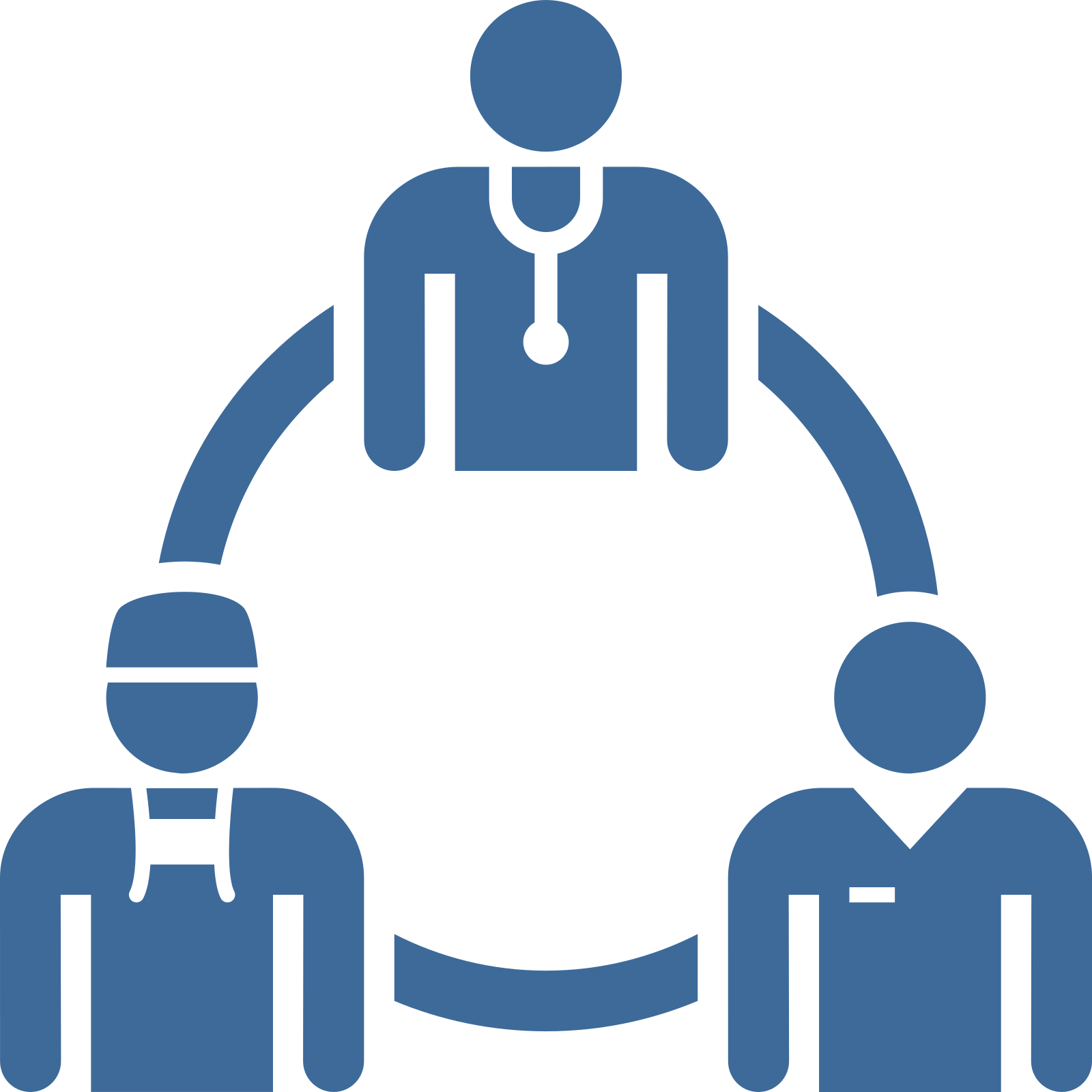
Work effectively as part of a multidisciplinary team
with other colleagues, providing genetic services in subspecialty medicine and genomic diagnostic laboratories. They liaise and work collaboratively with genetic counsellors and colleagues from other specialties, and work with lay organisations and consumer groups to support patients and families with genetic conditions.
-

Understand ethical, legal, social, and cultural issues
in the context of clinical genetics and clinical, epidemiological, and laboratory research.